
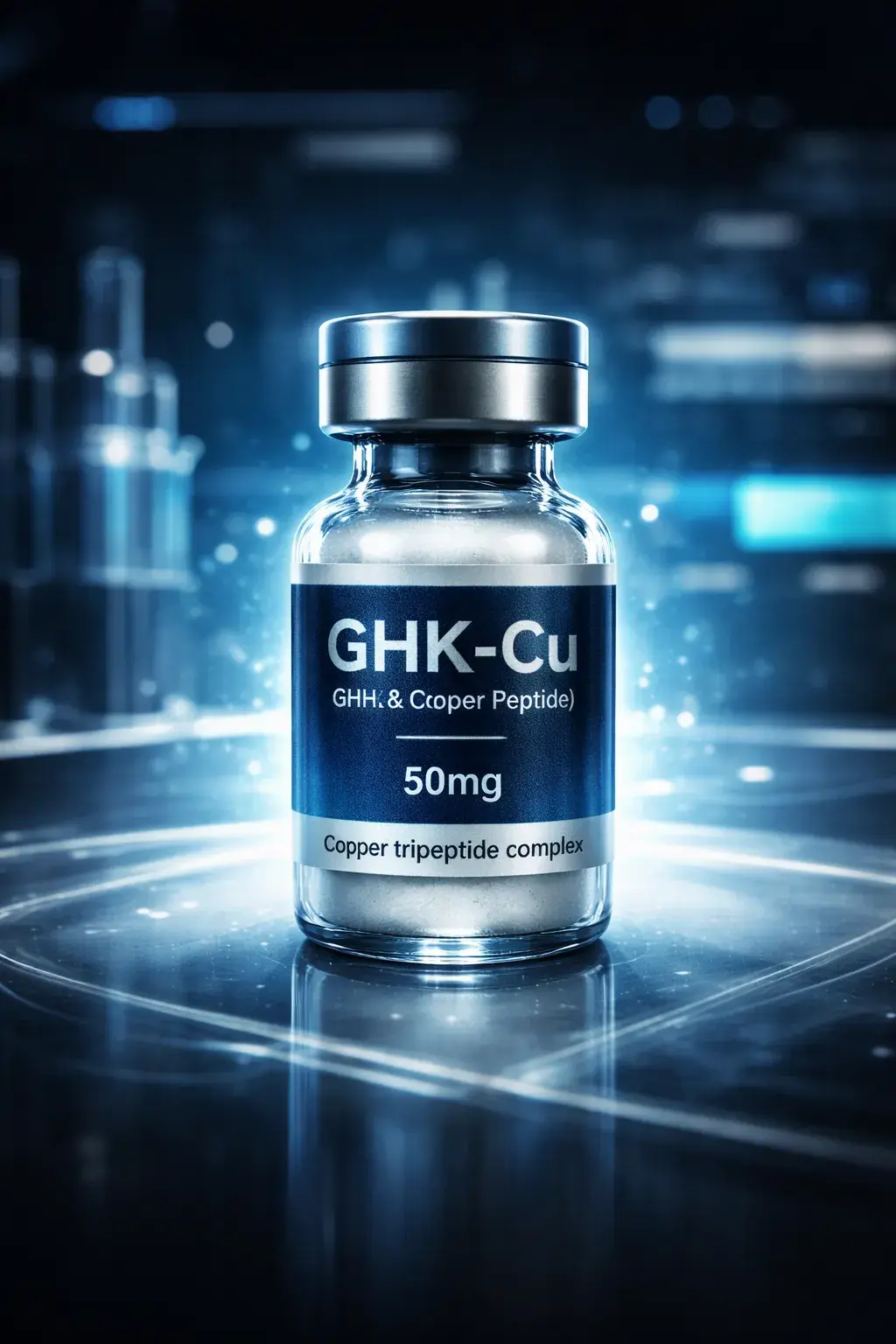
GHK-Cu (Copper Peptide)
GHK-Cu (glycyl-L-histidyl-L-lysine copper(II) complex) is a naturally occurring tripeptide-copper complex found in human plasma. Extensively studied for its role in tissue remodeling, collagen synthesis, and antioxidant defense mechanisms.
≥98%
50mg
Lyophilized Powder
Store at -20°C. Protect from light and moisture.
Mechanism of Action
GHK-Cu functions as a copper-binding tripeptide that modulates gene expression involved in tissue repair. It activates TGF-β signaling, upregulates collagen I, III, and elastin synthesis, stimulates glycosaminoglycan production, and promotes angiogenesis through VEGF and FGF-2 induction. The copper ion chelated by the GHK peptide serves as a cofactor for superoxide dismutase (SOD), contributing to its antioxidant properties.
Research Overview
GHK-Cu was first identified in human plasma by Dr. Loren Pickart in 1973, where it was found at concentrations of approximately 200 ng/mL in young adults, declining significantly with age. This naturally occurring tripeptide has since become one of the most extensively studied copper peptides in regenerative medicine research.
In wound healing studies, GHK-Cu has demonstrated the ability to stimulate blood vessel formation, nerve outgrowth, and collagen deposition. A seminal 2018 review in the International Journal of Molecular Sciences cataloged over 4,000 genes regulated by GHK-Cu, covering pathways related to tissue remodeling, antioxidant defense, anti-inflammatory signaling, and stem cell differentiation.
Recent research has expanded to explore GHK-Cu's potential in anti-aging applications. Studies show it can reverse gene expression patterns associated with aging, restore replicative vitality in fibroblast cells, and activate DNA repair pathways. The peptide has also shown efficacy in reducing oxidative stress markers and suppressing pro-inflammatory cytokines including IL-6 and TNF-α.
Published Research
Comprehensive review of 4,000+ GHK-regulated genes showing broad regenerative capacity including collagen synthesis, nerve outgrowth, and angiogenesis.
GHK-Cu reestablishes blood flow into damaged tissues through angiogenesis, promotes nerve regeneration, and functions as a potent antioxidant via SOD cofactor activity.
Chemical Profile
| Sequence | Gly-His-Lys:Cu²⁺ (tripeptide-copper complex) |
| Molecular Formula | C₁₄H₂₃CuN₆O₄ |
| Molecular Weight | 403.92 g/mol |
| CAS Number | 49557-75-7 |
| Half-Life | Short systemic half-life; requires localized administration for sustained tissue exposure |
| Solubility | Freely soluble in water; forms blue-colored solution due to Cu²⁺ complexation |
| Bioavailability | High topical bioavailability; copper ion facilitates membrane permeation |
Research Applications
References & Further Reading
- GHK-Cu — Wikipedia— Wikipedia
- GHK Copper Peptide — PubMed Search— PubMed
- ClinicalTrials.gov — GHK-Cu Studies— ClinicalTrials.gov
Research Use Only
This product is intended solely for laboratory research, analytical testing, and educational purposes. NOT FOR HUMAN CONSUMPTION. NOT FOR MEDICAL, VETERINARY, OR DIAGNOSTIC USE. This product has not been evaluated by the FDA.
Related Compounds
GLOW
GLOW Peptide Blend
Premium proprietary peptide blend for advanced dermatological research.
KPV
KPV Tripeptide
Alpha-MSH-derived tripeptide for inflammatory pathway research.
Epitalon
Epitalon (Epithalon)
Synthetic tetrapeptide for telomerase and aging pathway research.