
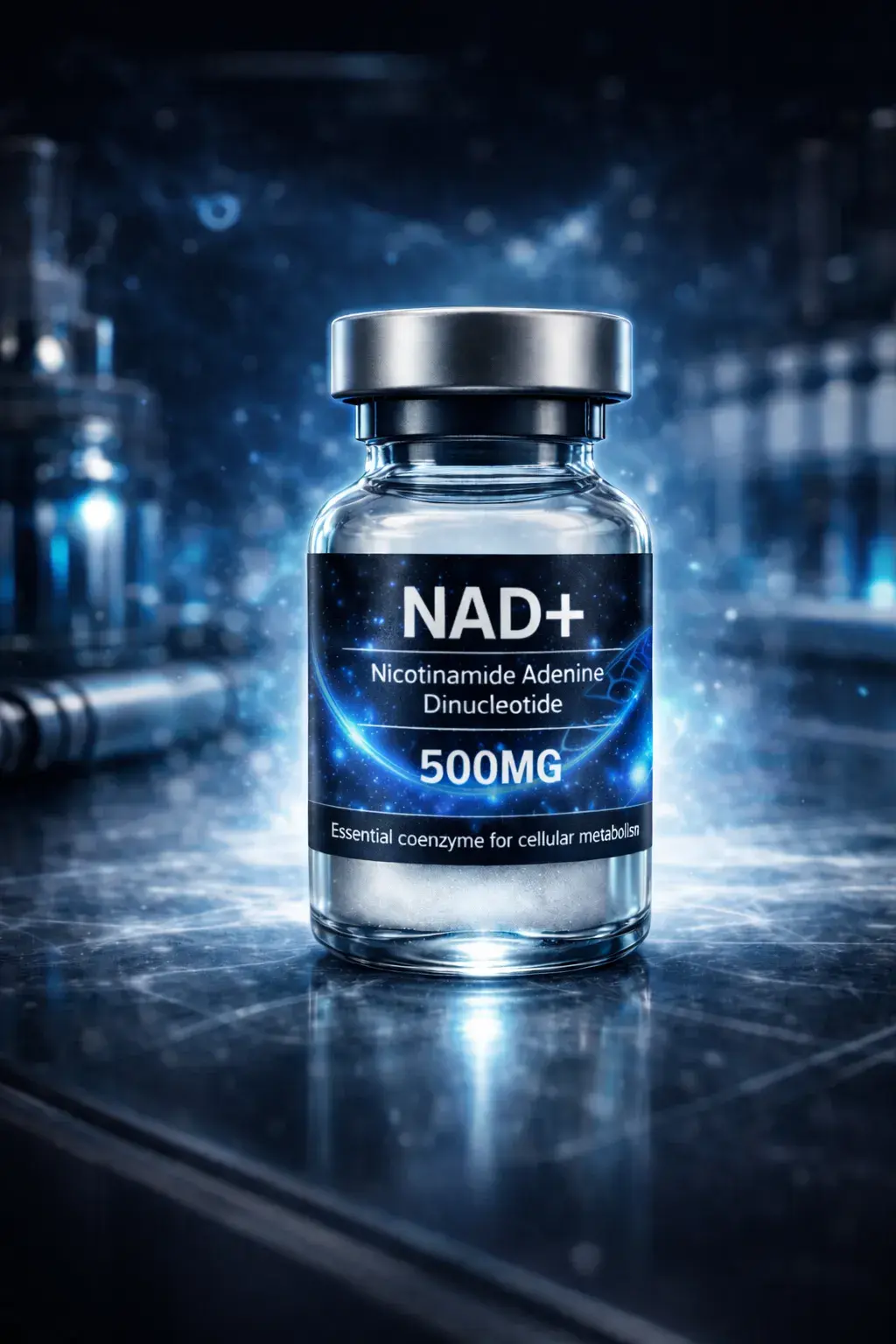
NAD+ (Nicotinamide Adenine Dinucleotide)
NAD+ (Nicotinamide Adenine Dinucleotide) is a critical coenzyme found in every living cell. It plays essential roles in cellular energy metabolism, DNA repair, and sirtuin activity. Widely studied in aging and metabolic research.
≥99%
500mg
Lyophilized Powder
Store at -20°C. Protect from light and moisture.
Mechanism of Action
NAD+ (nicotinamide adenine dinucleotide) functions as a critical coenzyme in over 500 enzymatic reactions, serving as an electron carrier in mitochondrial oxidative phosphorylation (Complexes I–IV) and as a substrate for NAD+-consuming enzymes including sirtuins (SIRT1–7), poly(ADP-ribose) polymerases (PARPs), and CD38. NAD+ levels decline with age, creating a metabolic deficit that impairs mitochondrial function, DNA repair, and epigenetic regulation.
Research Overview
NAD+ has become one of the most intensively studied molecules in aging and metabolic research, with over 25,000 publications indexed in PubMed. The discovery that NAD+ levels decline significantly with age — and that this decline contributes to mitochondrial dysfunction, genomic instability, and metabolic disease — has positioned NAD+ metabolism as a central target in longevity research.
A landmark 2014 review in Cell by Imai and Guarente established NAD+ and sirtuins as key mediators of aging and disease, demonstrating that NAD+ depletion impairs nuclear-mitochondrial communication and accelerates age-related pathology. Subsequent work by David Sinclair and others showed that boosting NAD+ levels through precursors like NMN and NR could reverse aspects of age-related mitochondrial decline in mouse models.
Research has expanded to explore NAD+ in cardiovascular disease, neurodegeneration, immune function, and cancer metabolism. The NAD+/PARP1/SIRT1 axis has been identified as a critical intersection point where NAD+ availability determines the balance between DNA repair (PARP consumption) and epigenetic regulation (sirtuin activity).
Published Research
Established that NAD+ decline during aging causes defects in nuclear and mitochondrial functions, positioning NAD+ as a critical mediator of age-related disease.
Comprehensive review demonstrating NAD+ directly influences metabolic pathways, DNA repair, chromatin remodeling, cellular senescence, and immune function during aging.
Sirtuins (SIRT1-7) as NAD+-dependent deacylases demonstrate remarkable disease prevention abilities, with NAD+ boosting strategies showing efficacy in preclinical aging models.
Chemical Profile
| Sequence | Not a peptide — dinucleotide coenzyme (nicotinamide + adenine linked by phosphodiester bridge) |
| Molecular Formula | C₂₁H₂₇N₇O₁₄P₂ |
| Molecular Weight | 663.43 g/mol |
| CAS Number | 53-84-9 |
| Half-Life | Intracellular half-life of ~1-2 hours; rapidly consumed by PARP, sirtuin, and CD38 enzymes |
| Solubility | Freely soluble in water (≥100 mg/mL); stable in solid form at -20°C |
| Bioavailability | Limited oral bioavailability of intact NAD+; precursors (NMN, NR) used for systemic delivery in research |
Research Applications
References & Further Reading
- NAD+ — Wikipedia— Wikipedia
- NAD+ Aging — PubMed Search— PubMed
- NAD Metabolism — KEGG Pathway— KEGG
- Central Role of NAD+ in Aging — PMC Review— PMC / NIH
Research Use Only
This product is intended solely for laboratory research, analytical testing, and educational purposes. NOT FOR HUMAN CONSUMPTION. NOT FOR MEDICAL, VETERINARY, OR DIAGNOSTIC USE. This product has not been evaluated by the FDA.
Related Compounds
SS-31
SS-31 (Elamipretide)
Mitochondria-targeting tetrapeptide for bioenergetics research.
MOTS-C
MOTS-C Mitochondrial Peptide
Mitochondrial-derived peptide for metabolic homeostasis research.
Illumineuro
Illumineuro (Neuroactive Research Blend)
Proprietary neuroactive peptide blend for mood pathway research.