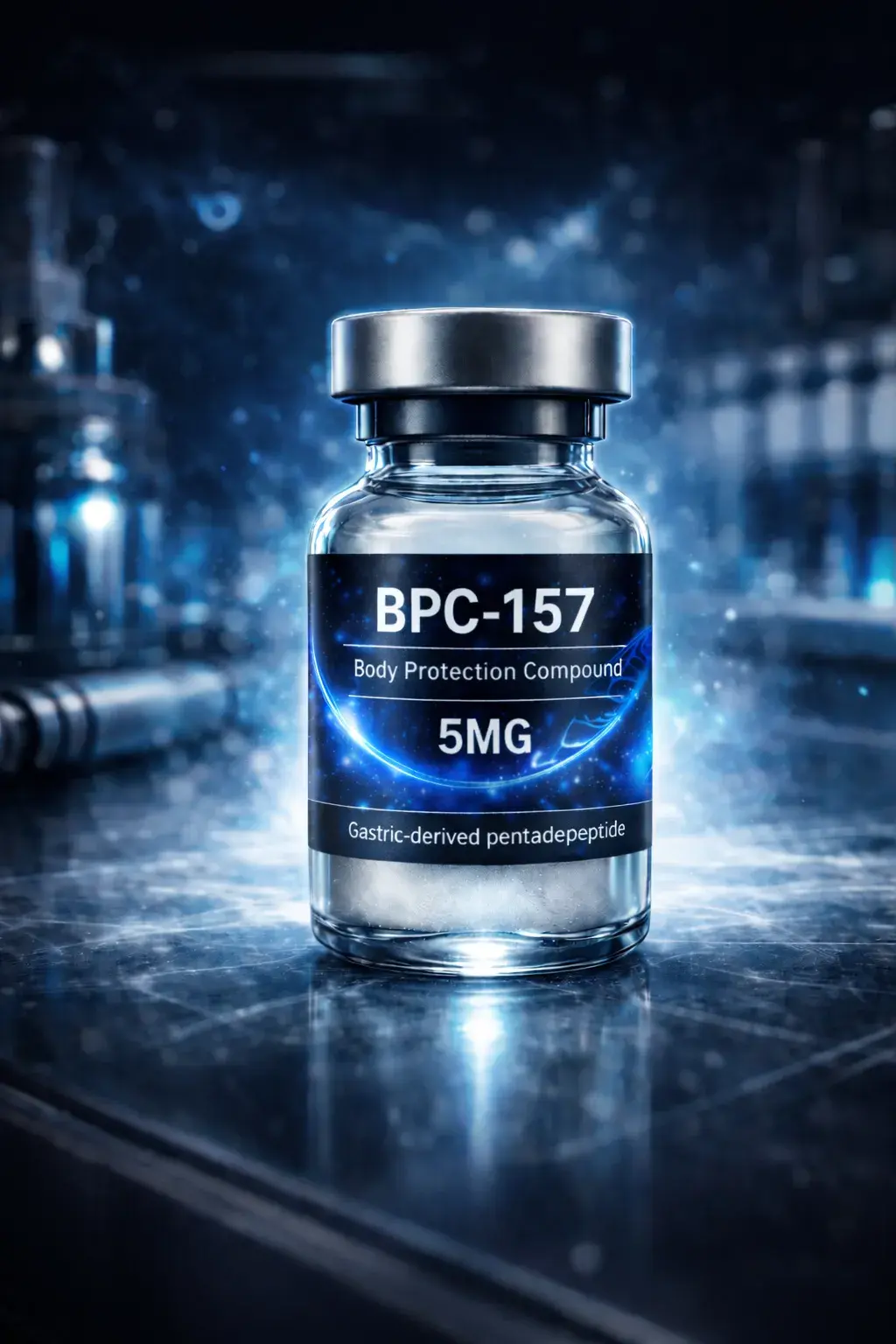
BPC-157 (Body Protection Compound)
BPC-157 is a pentadecapeptide derived from human gastric juice. It has been extensively studied in tissue repair, angiogenesis, and gastrointestinal protection research. Often called the "wolverine peptide" in research settings.
≥99%
5mg
Lyophilized Powder
Store at -20°C. Protect from light and moisture.
Mechanism of Action
BPC-157 (Body Protection Compound-157) is a stable pentadecapeptide consisting of 15 amino acids derived from a larger protein found in human gastric juice. It promotes angiogenesis through upregulation of VEGF (vascular endothelial growth factor) and its receptor VEGFR2, activates the FAK-paxillin pathway for cell migration, and modulates the nitric oxide (NO) system. BPC-157 also interacts with the dopaminergic system and has demonstrated cytoprotective effects through stabilization of cellular membranes and counteraction of gut-leaky syndrome.
Research Overview
BPC-157 has been studied extensively by Dr. Predrag Sikirić and colleagues at the University of Zagreb, Croatia, with over 100 published studies examining its effects across multiple organ systems. The peptide is unique in its stability in human gastric juice — unlike most peptides, it does not degrade in acidic conditions, which has implications for oral bioavailability research.
In wound healing studies, BPC-157 has demonstrated accelerated healing of muscles, tendons, ligaments, bones, and skin in animal models. The peptide promotes formation of granulation tissue, increases reticulin and collagen synthesis, and stimulates angiogenesis. A key 2021 PMC review cataloged its effects on musculoskeletal soft tissue healing across multiple tissue types.
Gastrointestinal research represents BPC-157's original therapeutic context. Studies show it protects stomach cells against various noxious agents, maintains gastric integrity, and modulates the brain-gut axis. Recent research has expanded to explore its effects on organ damage, sepsis, and neurological pathology, establishing BPC-157 as one of the most versatile peptides in regenerative medicine research.
Published Research
Comprehensive review of BPC-157's role in accelerating musculoskeletal soft tissue healing including muscle, tendon, ligament, and bone repair.
BPC-157 protects stomach cells against noxious agents and maintains gastric integrity, confirming its cytoprotective mechanism in the gastrointestinal tract.
BPC-157 is stable in human gastric juice, functions as a membrane stabilizer, and counteracts gut-leaky syndrome with demonstrated angiogenic and cytoprotective effects.
Chemical Profile
| Sequence | Gly-Glu-Pro-Pro-Pro-Gly-Lys-Pro-Ala-Asp-Asp-Ala-Gly-Leu-Val (15 amino acids) |
| Molecular Formula | C₆₂H₉₈N₁₆O₂₂ |
| Molecular Weight | 1419.53 g/mol |
| CAS Number | 137525-51-0 |
| Half-Life | Stable in gastric juice (unique among peptides); systemic half-life not fully characterized |
| Solubility | Soluble in water; stable across wide pH range including gastric acid conditions |
| Bioavailability | Active via oral, intraperitoneal, and topical routes in research models; gastric stability enables oral research applications |
Research Applications
References & Further Reading
- BPC-157 — Wikipedia— Wikipedia
- BPC-157 — PubMed Search— PubMed
- BPC 157 Safety Review — PMC— PMC / NIH
Research Use Only
This product is intended solely for laboratory research, analytical testing, and educational purposes. NOT FOR HUMAN CONSUMPTION. NOT FOR MEDICAL, VETERINARY, OR DIAGNOSTIC USE. This product has not been evaluated by the FDA.